
Miként változott a közösség arculata?
Az 1910-es népszámlálás szerint 4278 zsidó élt Nagykanizsán, 1920-ban 3663 fő, melyből 880 volt adófizető. A háború után többen elköltöztek a városból. A hitközség tagjai az 1920-as évek végére foglalkozásuk szerint: 13 nagykereskedő, 358 kereskedő, 16 nagyiparos, 195 iparos, 19 gazdálkodó, 26 ügyvéd, 23 orvos, 4 mérnök, 100 magántisztviselő, 12 köztisztviselő, 6 vállalkozó, 81 magánzó, 13 tanító és tanár volt, a többi egyéb foglalkozási ágakban dolgozott. 80 fő közadakozásból élt.
A változás társadalmi vetülete is érezhetővé vált. Nagykanizsa polgársága három társadalmi egyesület köré rendeződött. A Nagykanizsai Kaszinót 1835-ben alapították. Főként zsidók voltak a tagjai. 1944-es feloszlatásakor 228-tagből 25 keresztény, 263 izraelita vallású volt. A Bürger-Vereint 1836-ban alapították, 1848-ban a Polgári Egylet nevet kapta, de zsidó nem lehetett a tagja. A Nagykanizsai Társaskört 1875-ben izraeliták alapították, a zsidók magyarosodását előmozdítandó.
A két világháború között a neológ izraelita polgári elit intézményi szinten nem az önálló közép-európai zsidó nemzeteszmét támogatta. A cionizmus a nagykanizsai neológiában burkoltan, dr. Winkler Ernő révén jelent meg, aki főként az oktatás keretében a fiatalok körében, csendben terjesztette azt. A cionizmus neológ alternatíváját jelentő Zsidók Pro Palesztina szervezete nem tudott meggyökeresedni helyben.
1932-ben a hitközség nemzedékeken át legjelentősebb családjának, a gelsei Gutmann családnak a leszármazottjai eladták az Erzsébet tér 11. alatt álló palotájukat és Budapestre költöztek.
A Felső Kereskedelmi Iskola a hitközség sikertörténete volt. Alapját az 1842-ben épített zsidó elemi iskola adta, amely kereskedelmi iskolaként 1857-től kezdett működni. A 19. század végén már több mint 600 diák tanult benne. Az intézményt teljes egészében az izraelita hitközség tartotta fenn. Az iskola a két világháború között már nők számára is indított kereskedelmi szaktanfolyamokat.
A pénzintézetek vezetésében az 1930-as években zsidók és keresztények egyenlő arányban voltak jelen, de nem a felekezetiség volt a fontos, hanem a társadalmi helyzet határozta meg az összetételüket.
A két világháború közötti politikai és társadalmi változások abban is kifejeződtek, hogy a radikális és antiszemita Ébredő Magyarok Egyesületének országos vezetőségében több Zala vármegyei és nagykanizsai személy volt. Az egyik alelnök, a Zalai Közlöny című helyi lap főszerkesztője, Hegedüs György ügyvéd volt. Az antiszemitizmus felerősödését az 1930-as évek hozták. A Nyilas mozgalom helyi szervezete Festetics Sándor gróf vezetésével az 1930-as évek közepétől működött. Tagsága folyamatosan lépett át a Hungarista Mozgalomba, amely 1938. október 21-én magába olvasztotta a Festetics vezette csoportot.
A kor magyar társadalmának szimbolikus politikai törekvései, kultuszai és emlékezetpolitikája Nagykanizsán is megjelent. Az első világháborús elesett zsidó katonák emlékét a zsinagógánál tábla, a zsidó temetőben jelképes sírok örökítették meg. Utóbbiakat a Hősök Napján a Hevra Kadisa 1927. május 30-án avatta fel. A főhatalomnak kijáró tisztelet jegyében 1923. április 29-én Horthy Miklós nagykanizsai látogatásán dr. Winkler Ernő főrabbi is mondott beszédet. 1928 június 3-án a Zalai Közlönyben írt a gyermeknap, majd Trianon évfordulója kapcsán a nagykanizsai Stefánia Szövetség ügyvezető elnökeként a kanizsai gyerekek társadalmi problémáiról, a rossz lakáskörülményekről, az alultápláltságról és a magas csecsemőhalandóságról cikkezett.
How has the image of the community changed?
According to the 1910 census, 4,278 Jews lived in Nagykanizsa, and in 1920, there were 3,663, of whom 880 were taxpayers. After the war, many moved away from the city. By the end of the 1920s, the profession of the members of the Jewish community was as follows: 13 wholesalers, 358 merchants, 16 industrialists, 195 craftsmen, 19 farmers, 26 lawyers, 23 doctors, 4 engineers, 100 private officials, 12 civil servants, 6 entrepreneurs, 81 private traders, 13 teachers, and the rest worked in other occupations. 80 people lived on public donation.
The social impact of the change was also noticeable. The citizens of Nagykanizsa organized themselves into three social associations. The Nagykanizsa Casino was founded in 1835. Its members were mainly Jews. When it was terminated in 1944, it had 228 members, 25 of them were Christian and 263 of them were Jewish. The Bürger-Verein was founded in 1836 and renamed the Civic Association in 1848, but Jews were not allowed to become members. The Nagykanizsa Social Club was founded in 1875 by Israelites to promote the Magyarization of Jews.
Between the two world wars, the Neolog Jewish civic elite did not support the idea of an independent Central European Jewish nation on institutional level. Zionism appeared covertly in Nagykanizsa’s Neolog community by Dr. Ernő Winkler, who quietly spread it among young people, mainly in the context of education. The Jewish Pro-Palestine organization, which represented the Neolog alternative to Zionism, was unable to take root locally.
In 1932, the descendants of the Gutmann family of Gelse, the most prominent family in the community for generations, sold their palace at 11 Erzsébet Square and moved to Budapest.
The Upper Commercial School, considered a success story of the Jewish community. It was founded on the basis of the Jewish elementary school built in 1842, which began operating as a commercial school in 1857. By the end of the 19th century, it had more than 600 students. The institution was maintained entirely by the Jewish community until 1944. Between the two world wars, the school also launched commercial training courses for women.
In the 1930s, Jews and Christians were equally represented in the management of financial institutions, but it was not religious affiliation that determined their composition, but rather their social status.
The political and social changes between the two world wars were also reflected in the fact that several people from Zala County and Nagykanizsa were members of the national leadership of the radical and anti-Semitic Association of Awakening Hungarians. One of the vice-presidents was György Hegedüs, a lawyer and editor-in-chief of the local newspaper Zalai Közlöny. The 1930s brought a resurgence of anti-Semitism. The local branch of the Arrow Cross movement, led by Count Sándor Festetics, was active from the mid-1930s. Its members gradually transferred to the Arrow Cross Movement, which also absorbed the Festetics-led group on October 21, 1938.
The symbolic political aspirations, cults, and memory politics of Hungarian society at the time also appeared in Nagykanizsa. The memory of Jewish soldiers who fell in World War I was commemorated with a plaque at the synagogue and symbolic graves in the Jewish cemetery. The latter were inaugurated by the Hevra Kadisha on Heroes’ Day on May 30, 1927. In honor of the supreme authority, Chief Rabbi Dr. Ernő Winkler also gave a speech during Miklós Horthy’s visit to Nagykanizsa on April 29, 1923. On June 3, 1928, on Children’s Day and on the occasion of the anniversary of Trianon, as executive president of the Stefánia Association in Nagykanizsa, he wrote about the social problems of the children of Kanizsa, the poor housing conditions, malnutrition, and high infant mortality in the Zalai Közlöny newspaper.
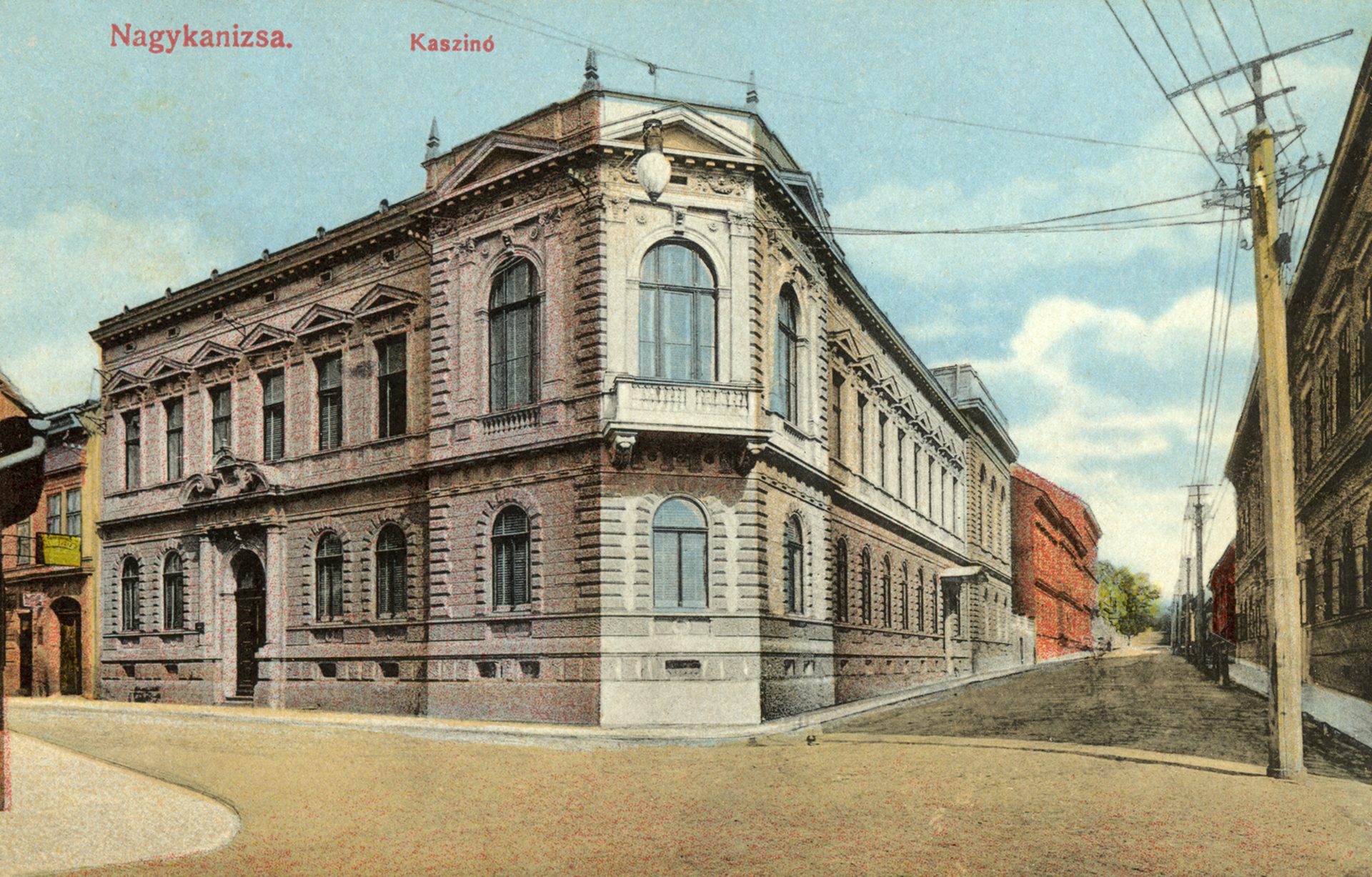
A nagykanizsai kaszinó ábrázolása színezett képeslapon
Depiction of the casino in Nagykanizsa on a colored postcard
© Thúry György Múzeum, Nagykanizsa
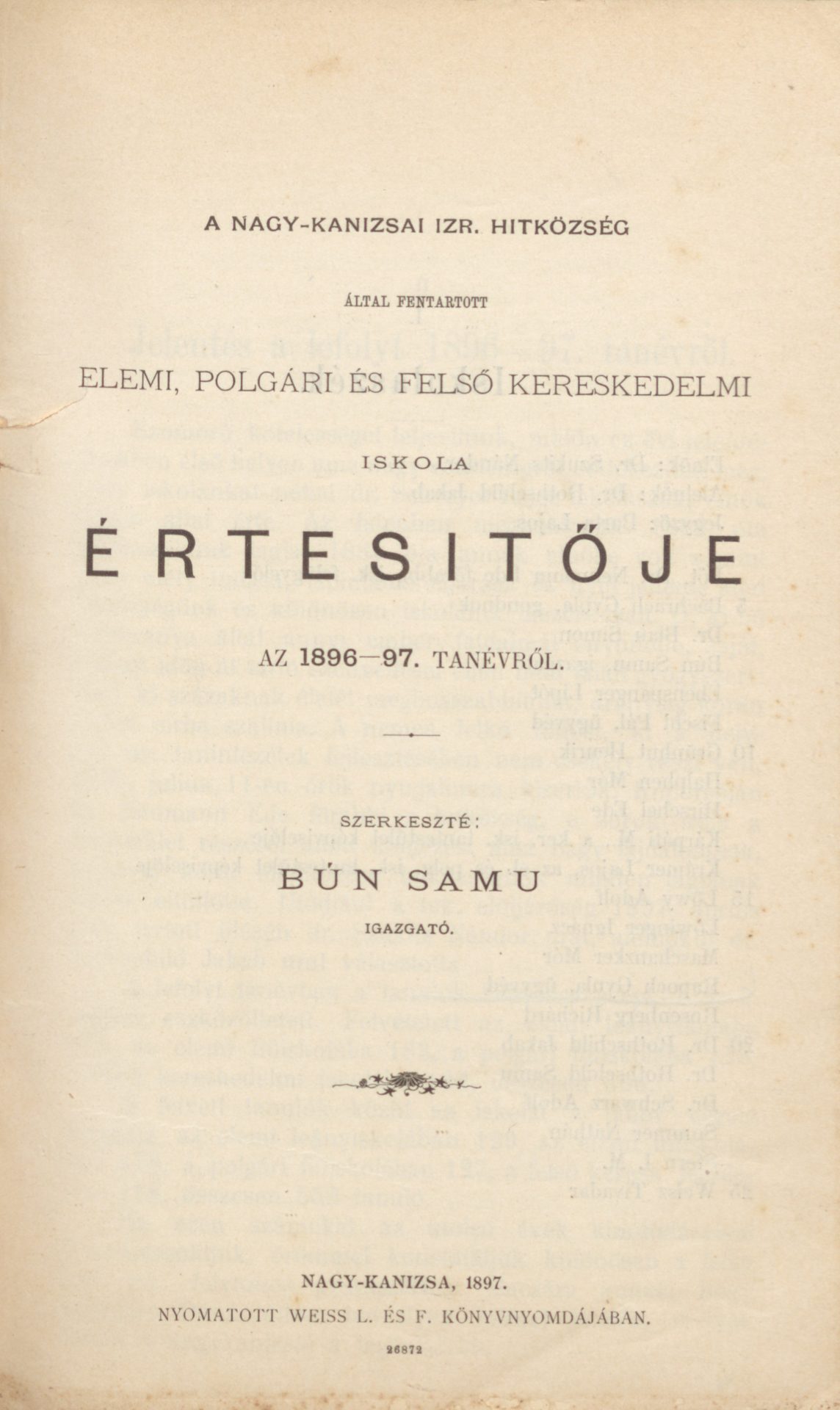
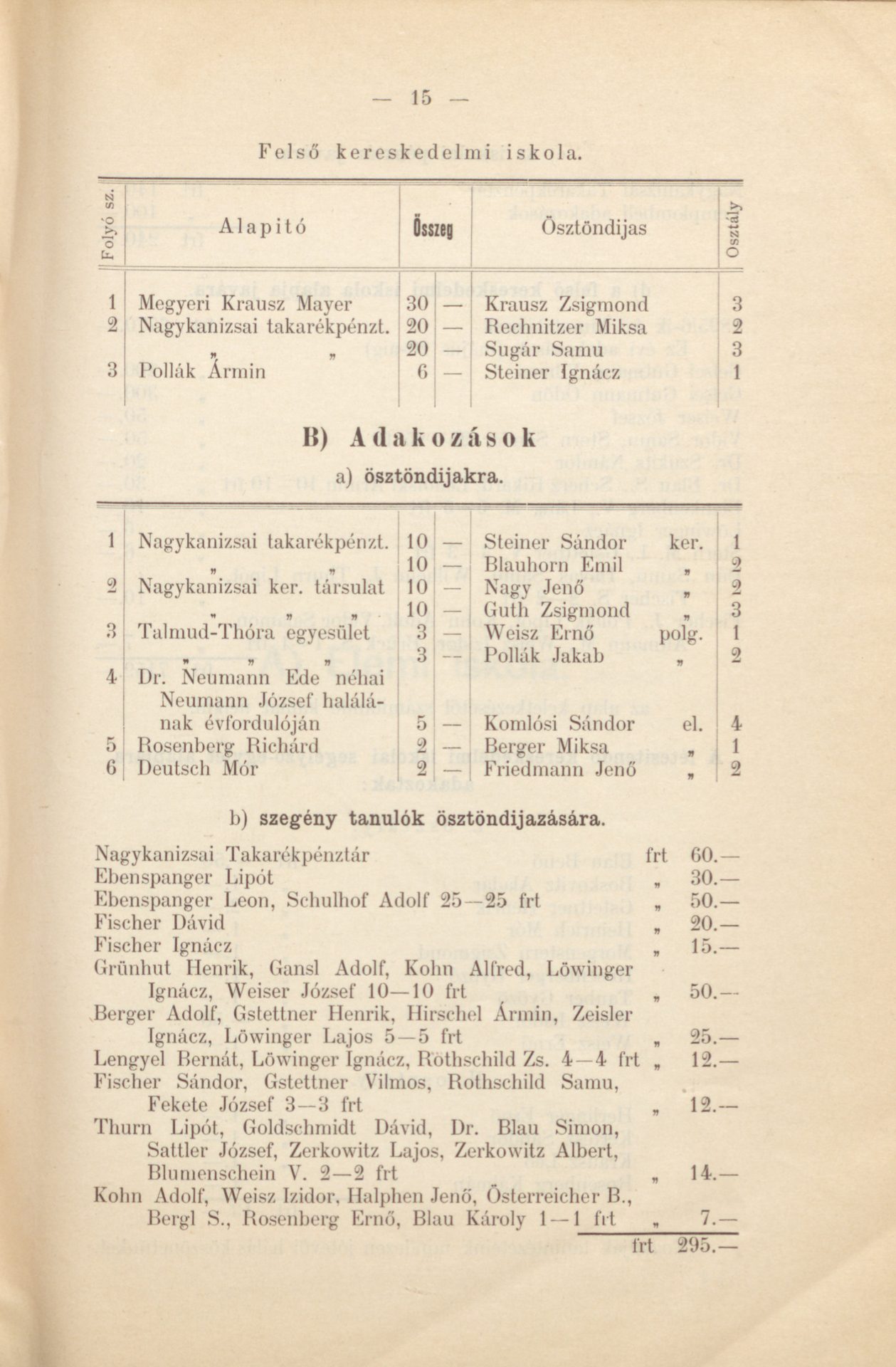
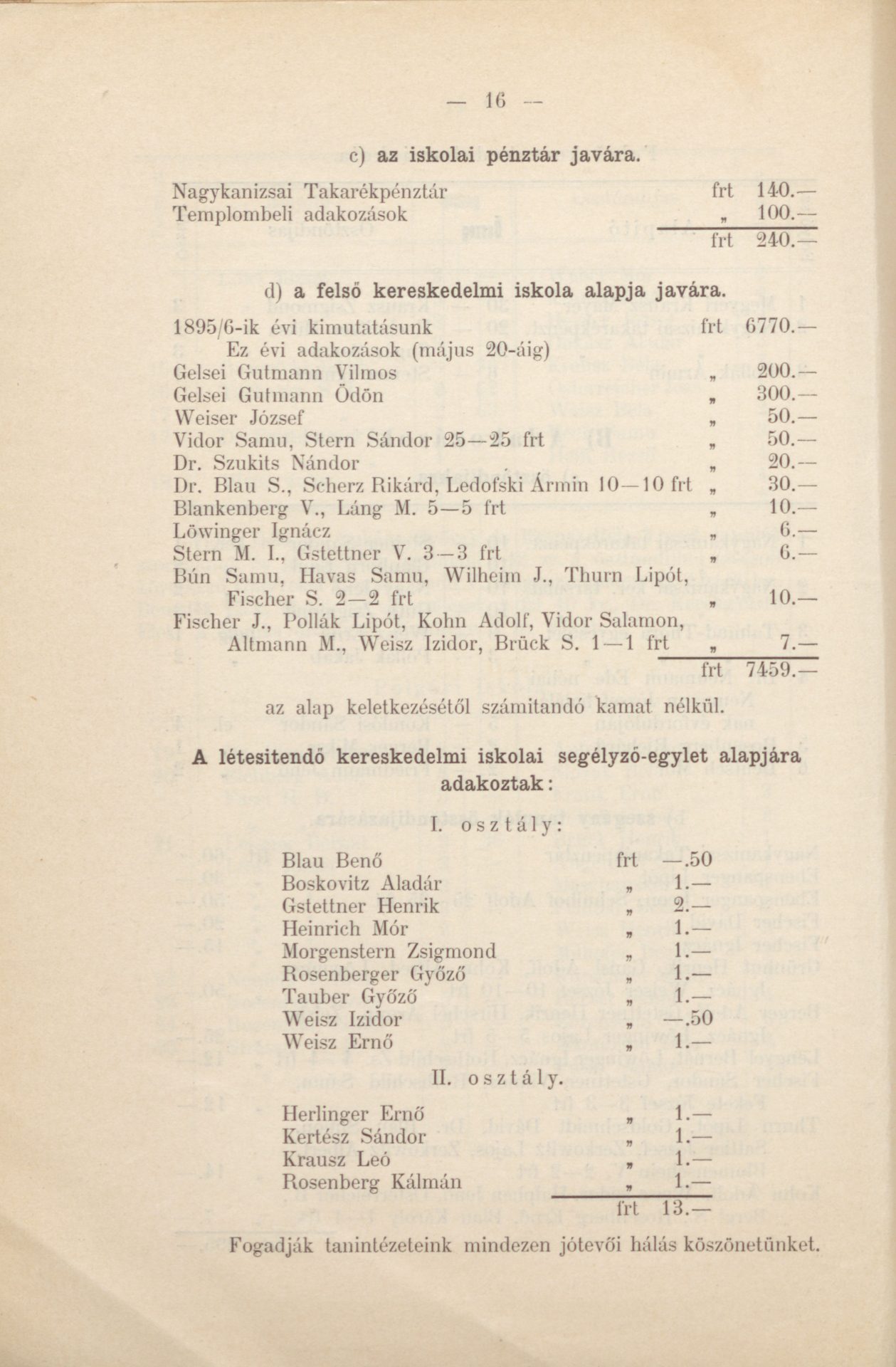
Adakozók névjegyzéke a Nagykanizsai Izraelita Hitközség által fenntartott Elemi, Polgári és Kereskedelmi Iskola 1896-97. tanévi értesítőjében
List of donors in the 1896-97 school year report of the Elementary, Civic, and Commercial School maintained by the Jewish Community of Nagykanizsa
© Országos Rabbiképző – Zsidó Egyetem Könyvtára, Budapest