
Mi volt az oka az orthodox különválásnak? / What was the reason for the Orthodox split?
Az orthodox zsidóság intézményi elkülönülésének rendszerszintű motivációja az volt, hogy a vallási normák terén kevésbé szigorú hitközség szolgáltatásait ugyan nem vehették igénybe, de hitközségi adó fizetésére kötelezve voltak. Egy párhuzamos hitközségi intézményrendszer létrehozatala és fenntartása viszont meghaladta a gazdasági erejüket. A győri orthodoxia különválásának neológ szempontú történetét Kemény József írta meg. Az elkülönülés kezdeményezésében fontos szerepet tulajdonított a szombati hetivásár sikertelen áthelyezésének. Az orthodox különválók maguk vették kézbe ennek ügyét. A szombati hetivásáron ugyanis szombattartó zsidó nem vehetett részt, ami egzisztenciális hátránnyal járt. A szombattartás az 1870-es években intézményesülő orthodoxiához tartozás egyik fontos kritériuma máig. A győrszigeti orthodox izraelita hitközség 1870. június 26-i megalakulását König Adolf győrszigeti gabonakereskedő és rokona, Gross Áron kóser bormérő 1870 július első napjaiban jelentette be Bangha István szolgabíró előtt. A különválást a későbbi neológ hitközség igyekezett megakadályozni, a vitát azonban báró Eötvös József kultuszminisztert 1870. november 10-én 21.772. szám alatt kelt leirata döntött el, melyben engedélyezte, hogy Győr és Győrsziget területén önálló és a már létező hitközségtől teljesen független hitközség alakuljon.
What was the reason for the Orthodox split?
The systemic motivation behind the institutional secession of Orthodox Jewry was that, while they could not avail themselves of the services of a less strictly observant community, they were still obligated to pay community taxes. However, the establishment and maintenance of a parallel community institutional system exceeded their financial capacity. József Kemény wrote the history of the separation of the Győr Orthodox community from a Neolog perspective. He attributed an important role in the initiative for separation to the failed relocation of the Saturday weekly market. The Orthodox secessionists took matters into their own hands. This is because Jews who observed the Sabbath were not allowed to participate in the Saturday market, which posed an existential disadvantage. Observing the Sabbath remains to this day one of the key criteria for belonging to Orthodoxy, which became institutionalized in the 1870s. The establishment of the Orthodox Jewish community of Győrsziget on June 26, 1870, was announced in the first days of July 1870 before Deputy Judge István Bangha by Adolf König, a grain merchant from Győrsziget, and his relative, Áron Gross, a kosher wine measurer. The future Neolog community sought to prevent the separation, but the dispute was settled by a decree from Minister of Culture Baron József Eötvös dated November 10, 1870, No. 21,772, in which he authorized the formation of an independent congregation in the territory of Győr and Győrsziget, completely separate from the existing congregation.
Az egykori orthodox imaház 2025-ben
The former orthodox prayer house in 2025
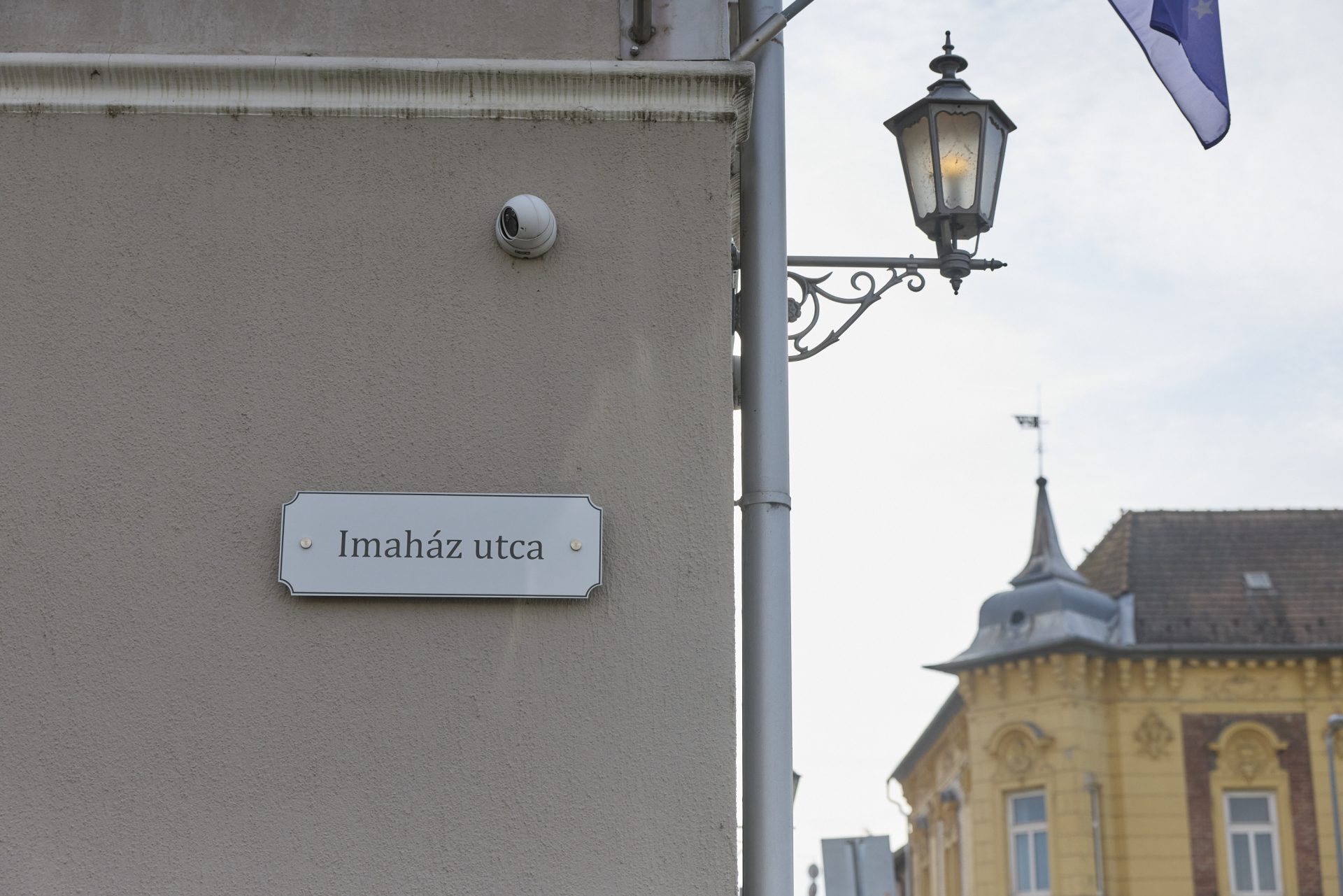
A győri Imaház utca névtáblája emlékeztet az egykori orthodox zsinagógára.
A fotókat Ritter Doron készítette.
The street sign on Imaház Street in Győr commemorates the former Orthodox synagogue.
The photos were taken by Doron Ritter.